Omni-Channel Apps
Senior UX/UI Designer
15 months
I led UX strategy and design across the full suite of interactive media — a dozen web apps, a mobile app, and a multi-touch table — working cross-functionally from concept through production.
The Challenge
The International Maize and Wheat Improvement Center (CIMMYT) is a key player in hunger reduction, food security and sustainable agriculture projects around the world. The CIMMYT Museum was created to provide context for the scientific research on wheat and maize, with a focus on agricultural achievements in the developing world.
The challenge was to showcase and explain the history of humankind’s relationship with wheat and maize, as well as the Institute’s global role since its foundation, in a succinct, engaging, and meaningful way to a broad audience. This was achieved through a carefully curated suite of interactive media experiences designed to work together seamlessly.
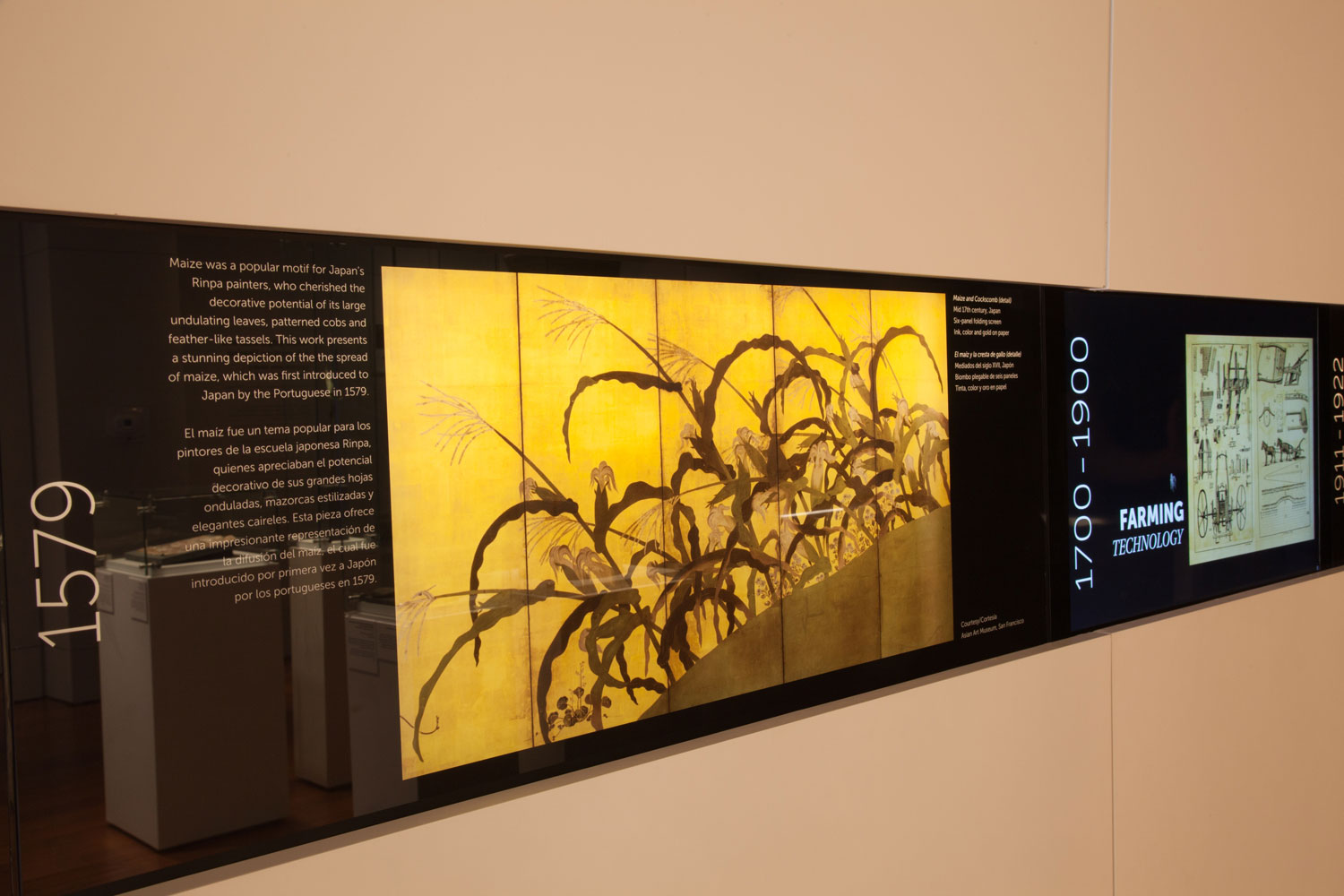
Interactive timeline (detail)
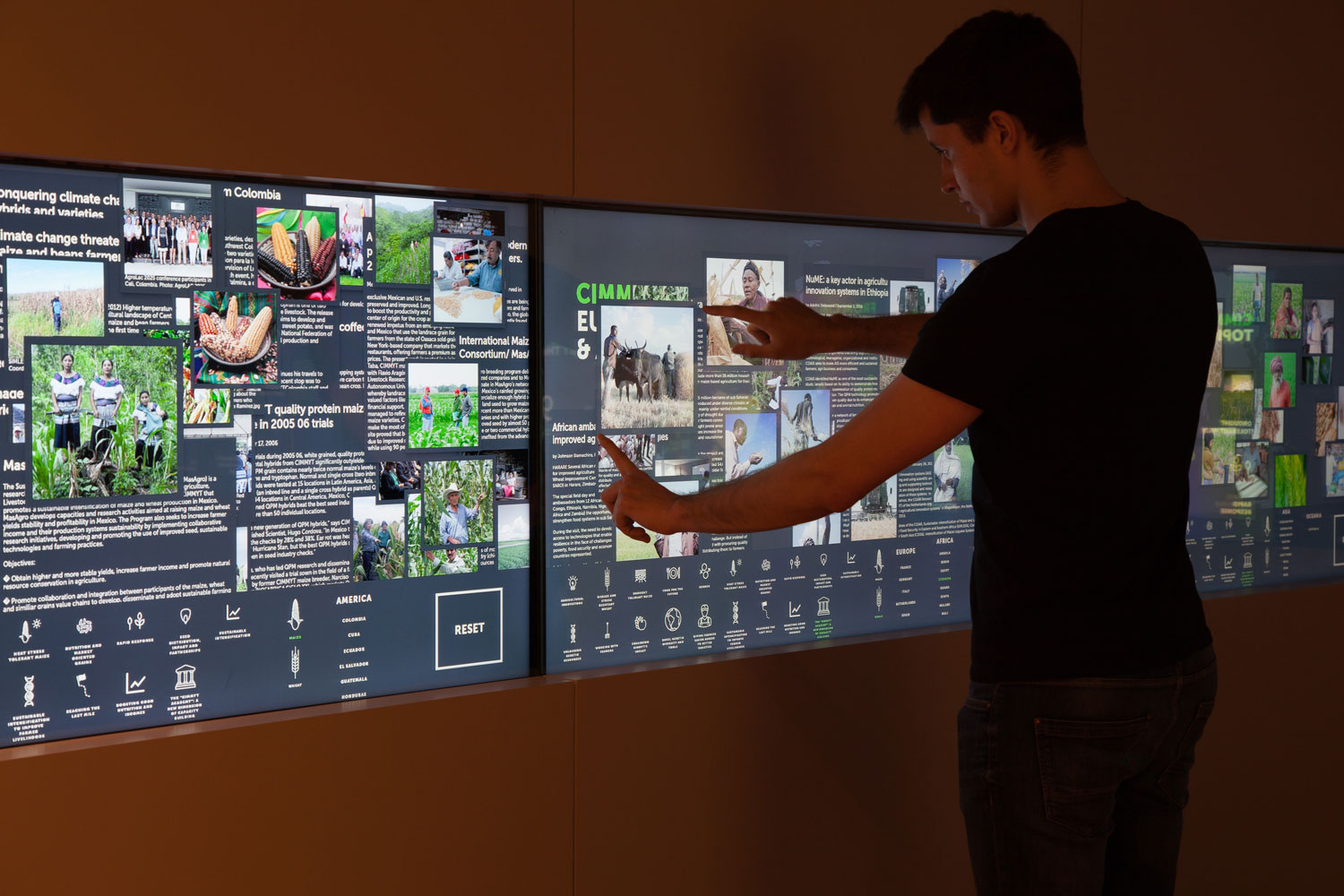
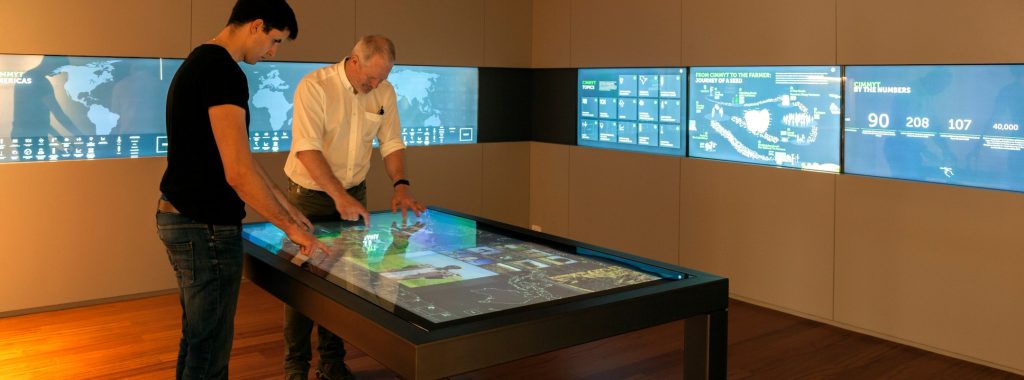
Multitouch screens showcasing a live repository of CIMMYT’s work around the globe.
The Strategy
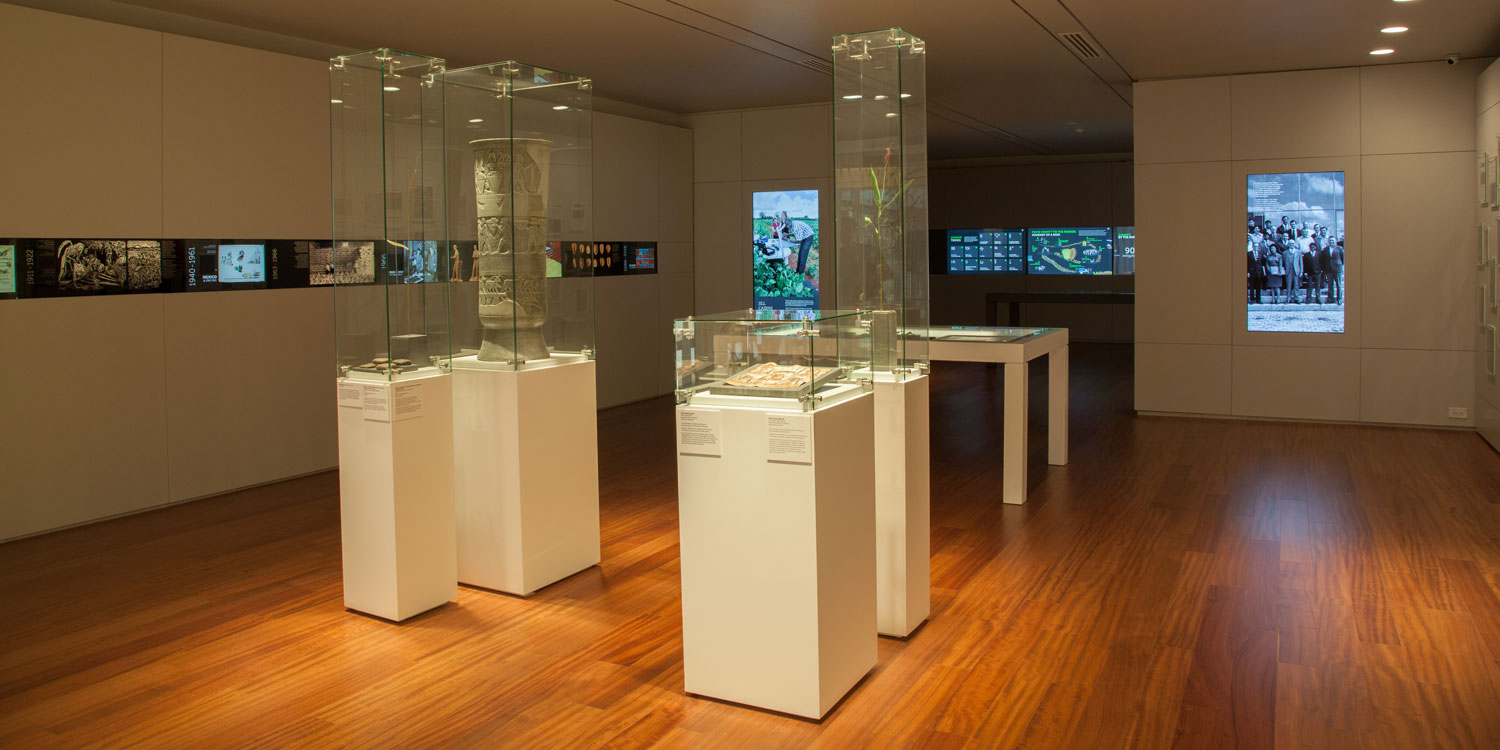
To convey numerous stories within a confined physical space, a multi-layered approach using digital media devices with varying depths of information was implemented. This empowered users to engage with content based on their preferences, whether seeking a quick overview or a more immersive experience.
My team and I employed a systems thinking approach, integrating strong branding and creative direction with a cohesive editorial style. I built a design system from scratch and guided the production team to ensure a unified look and feel across all elements, from digital interfaces to physical touchpoints.
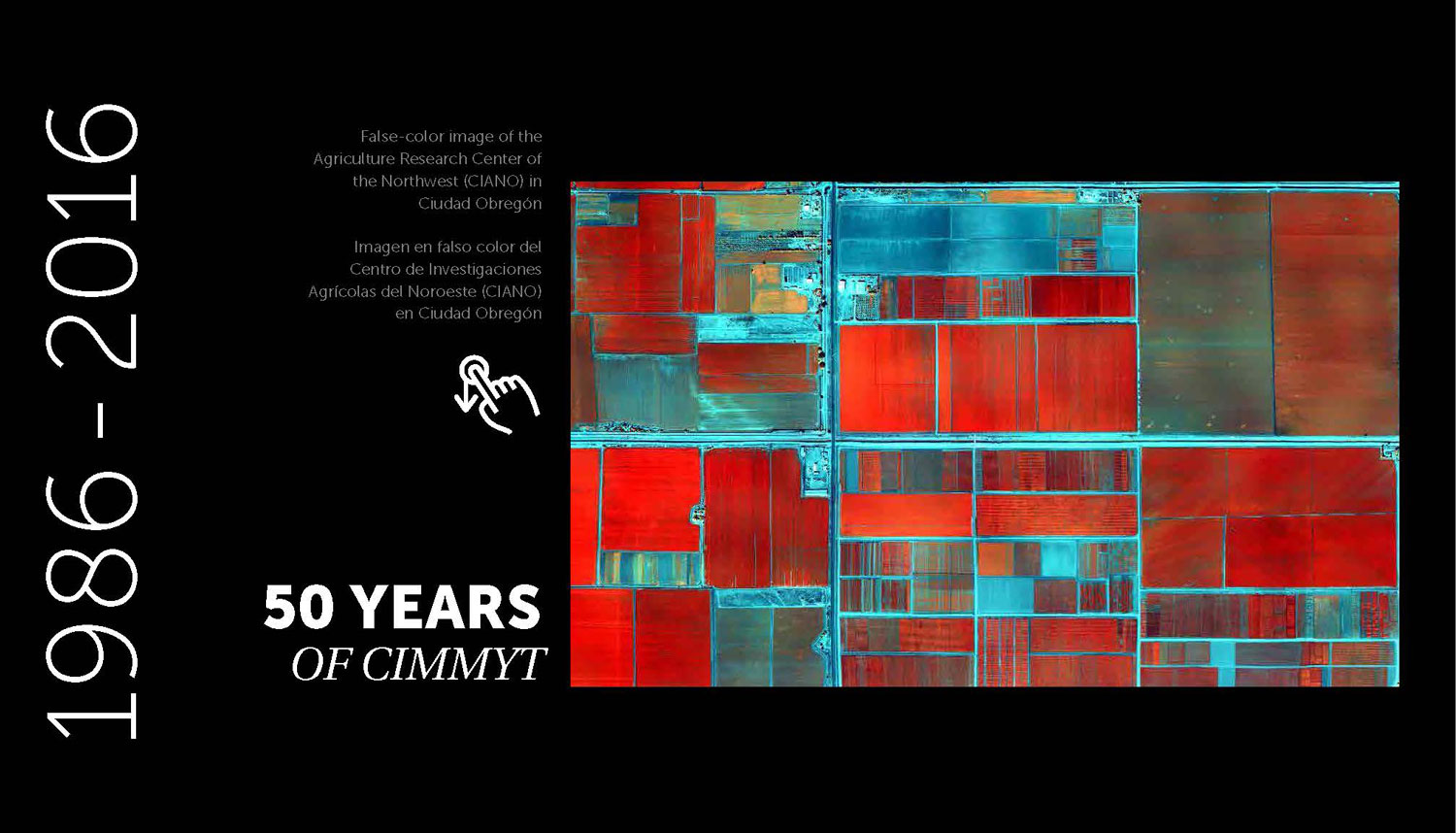
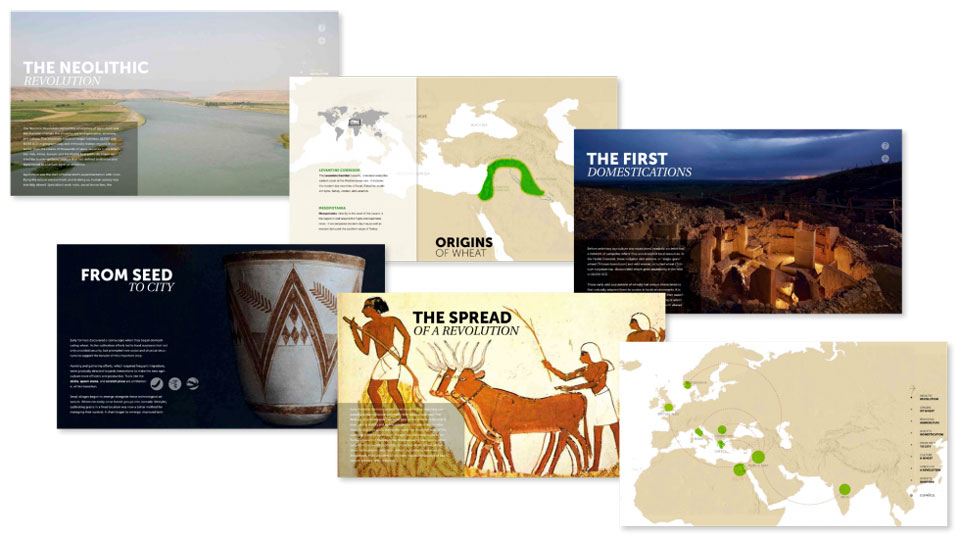
Editorial-style landing pages were designed, providing clear and engaging entry points to explore the timeline’s content
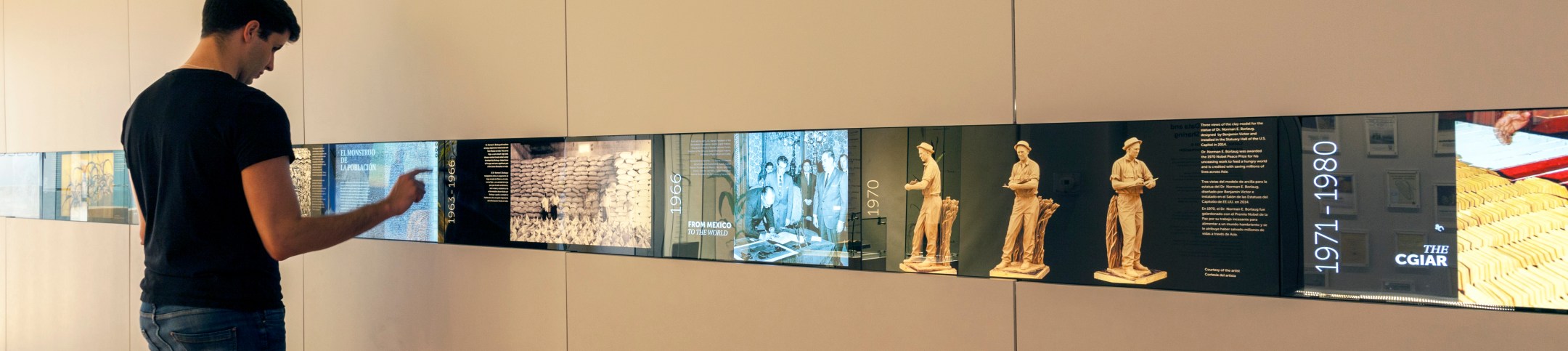
The timeline showcased the intertwined histories of wheat and maize cultivation, the evolution of farming tools, and the institution’s own development
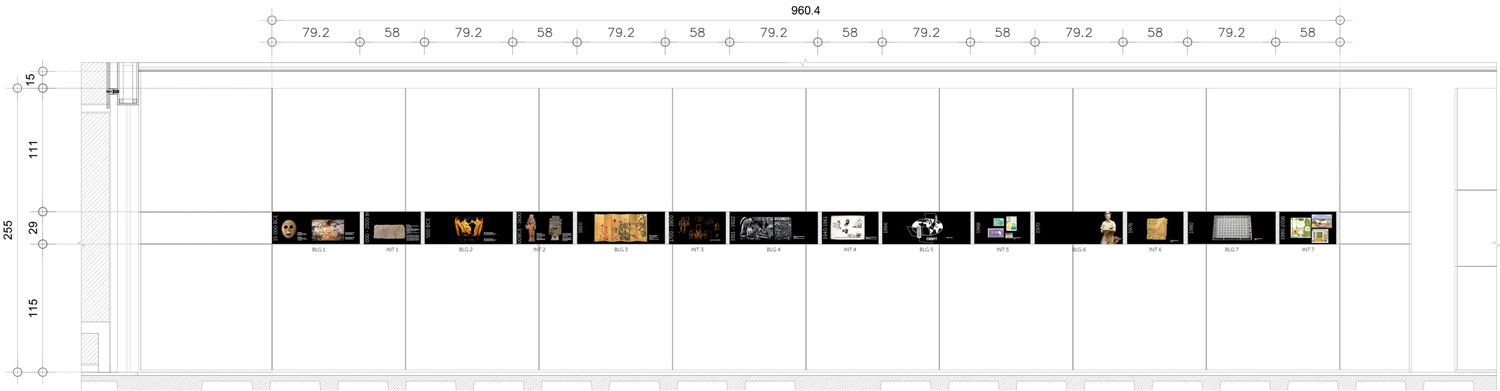
Elevation of wall where timeline screens are mounted
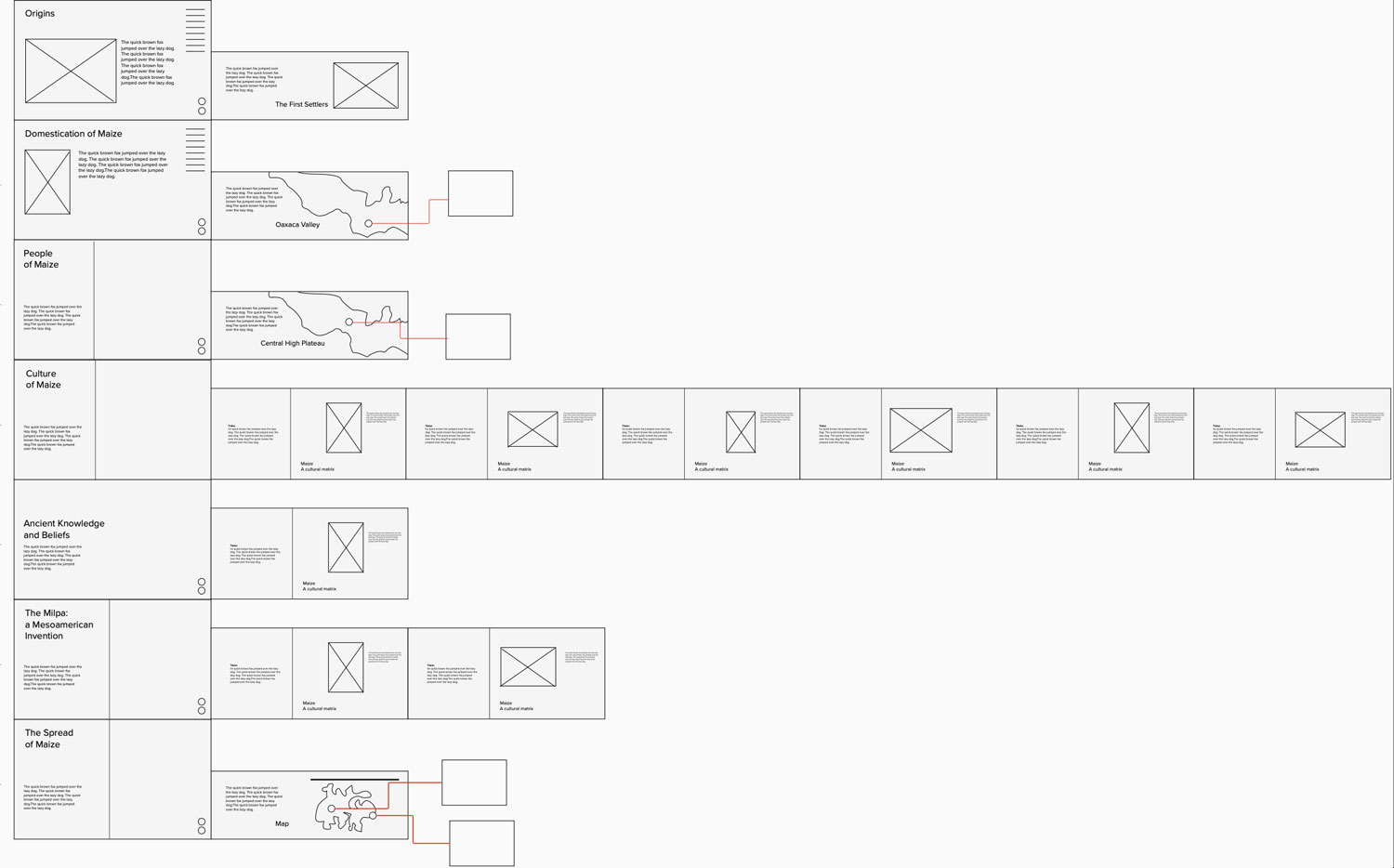
Timeline wireframe (maize section – detail)
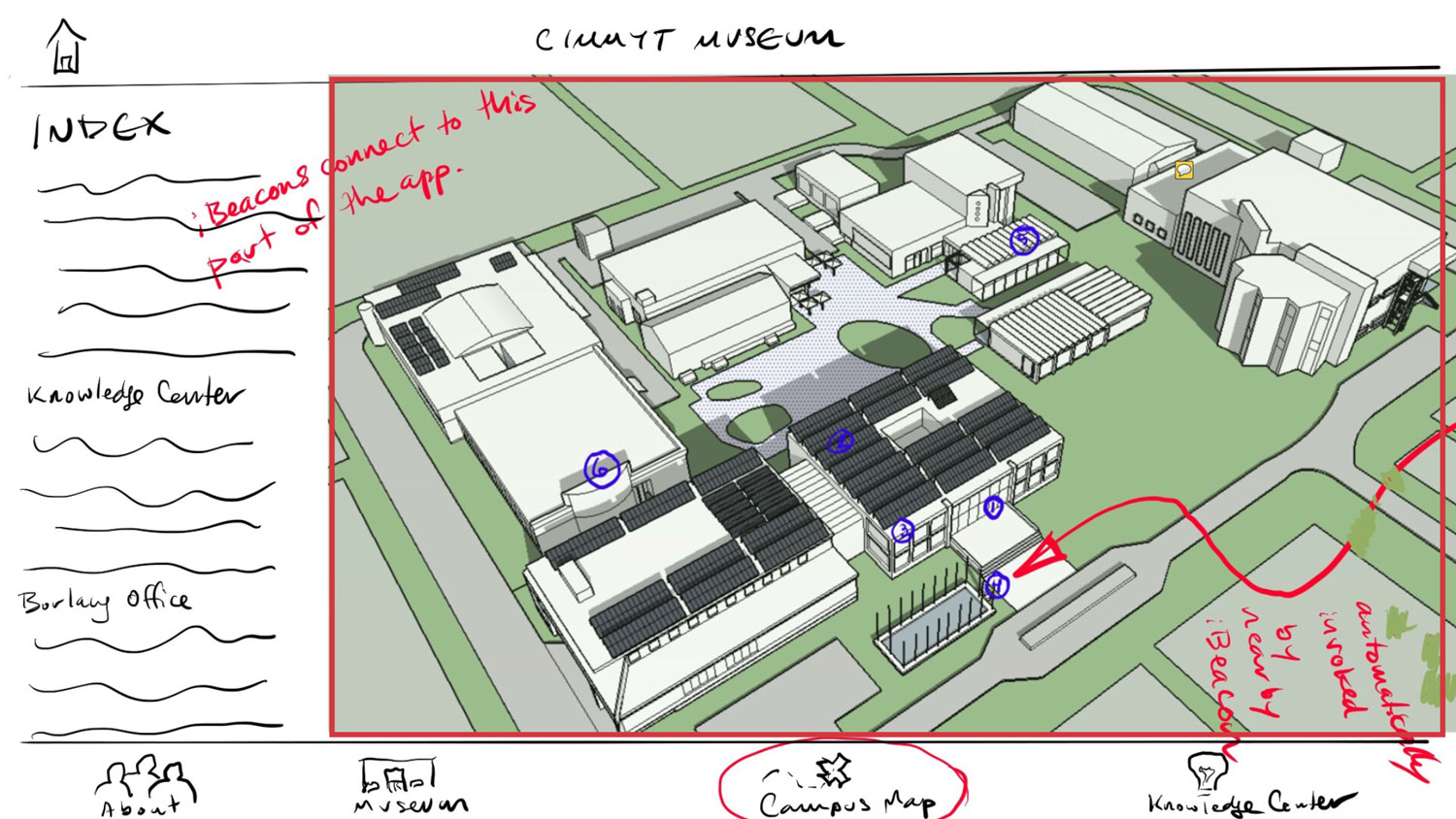
Campus tour wireframe
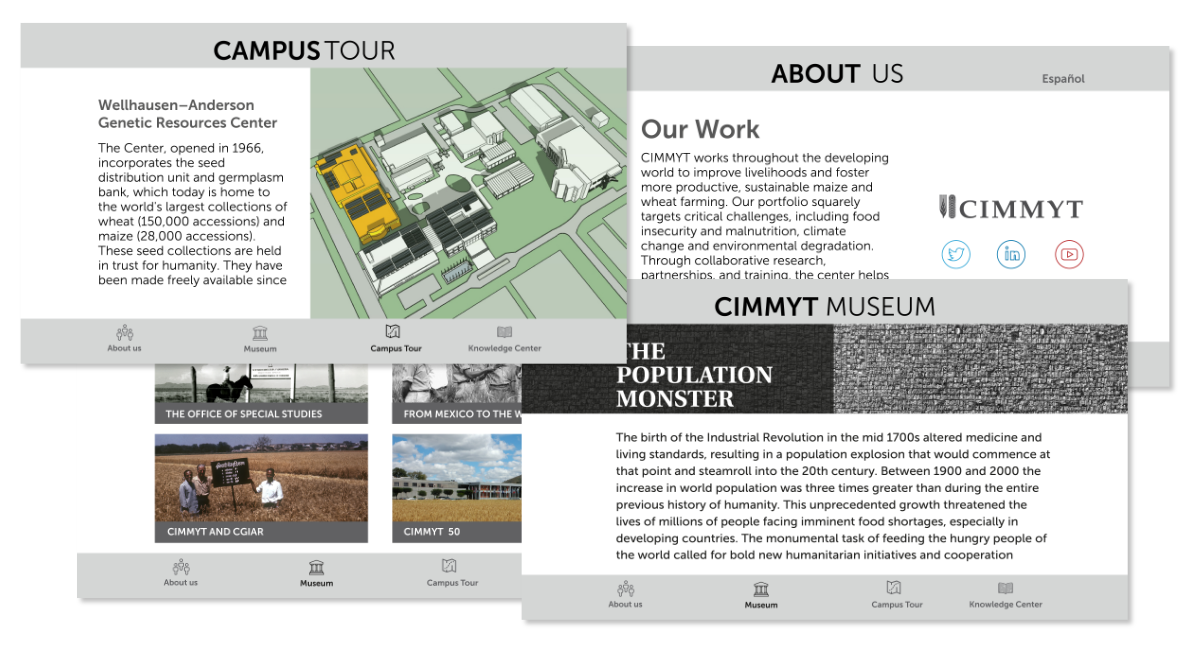
A responsive website, accessed through the app (prototype shown — desktop view).
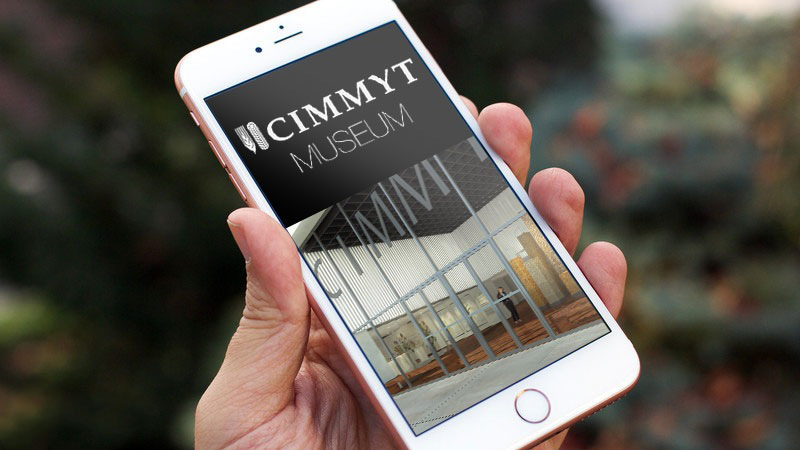
Another part of the solution was a bilingual cross-platform mobile app, automatically communicating with iBeacons in the museum and around the campus to enable a self-guided facilities tour.
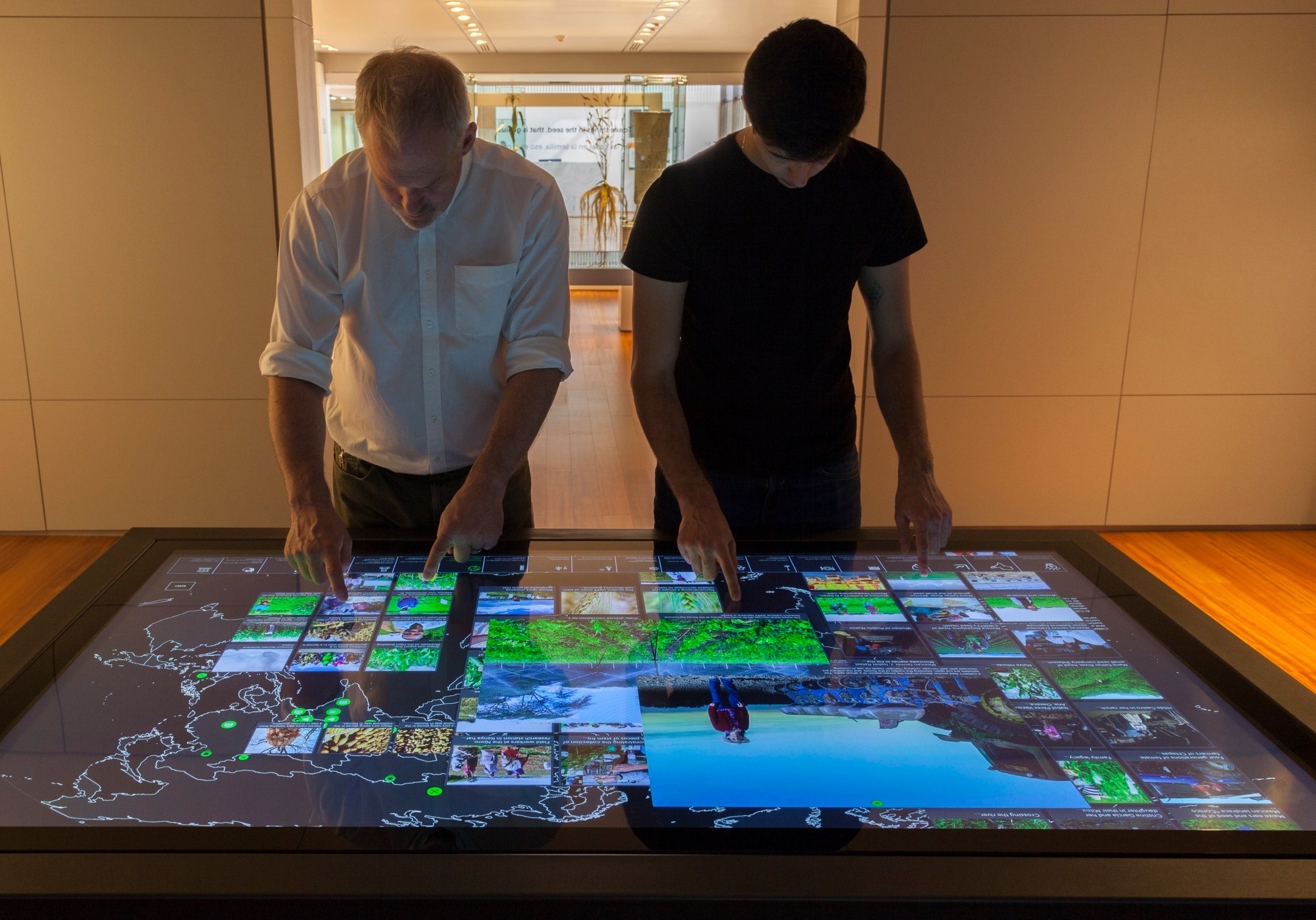
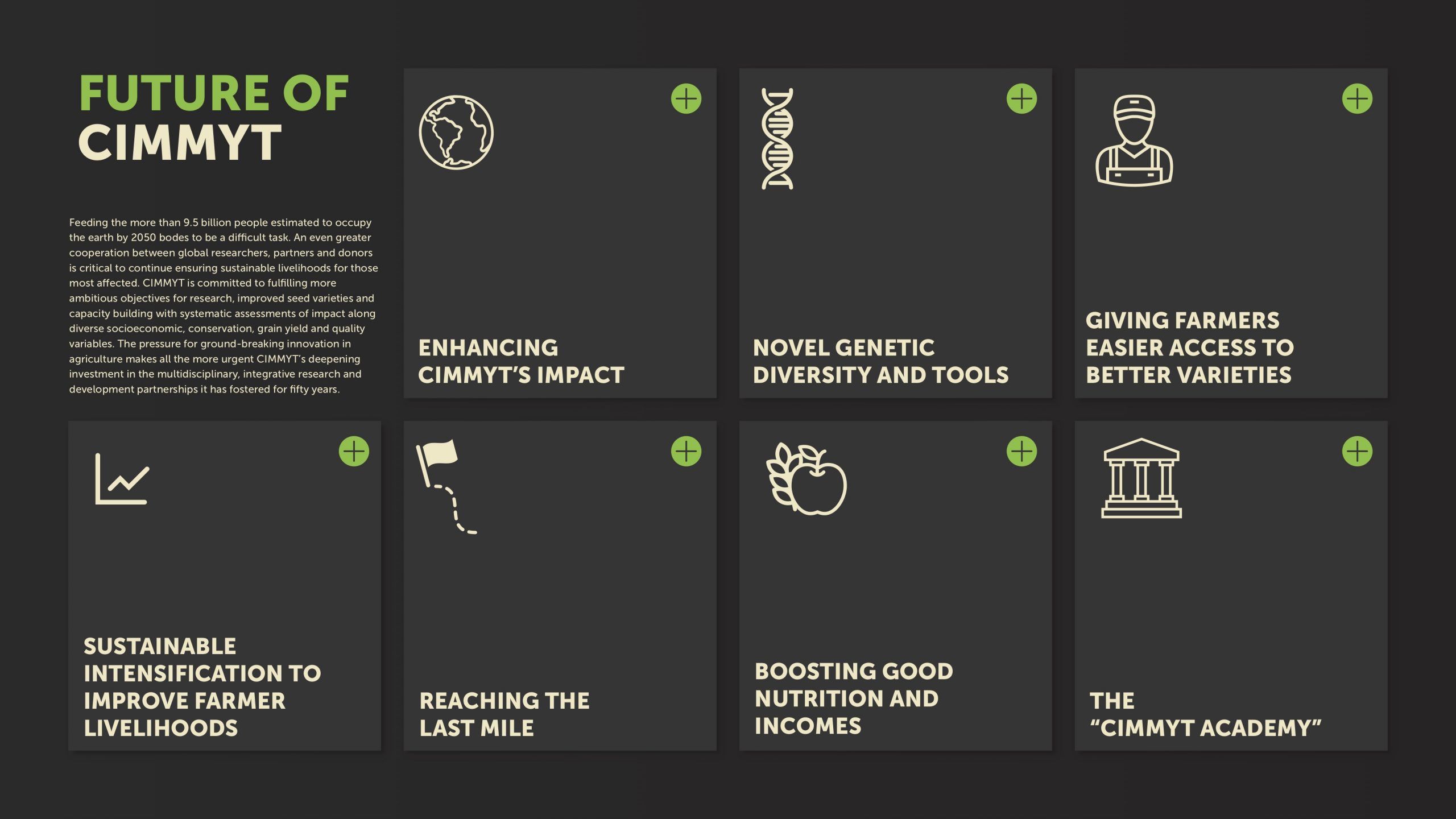
Elsewhere, a multi-user multi-touch map and dashboards offer insights into the present and future of the institution.

Results
The result is an elegantly simple and effective way to introduce the Institute, viewed by thousands of schoolchildren and hundreds of scientists, dignitaries and other visitors.