
Product design lead
UX Strategy, Usability Testing, Design
Duration: 12 months
Abbott team: Product manager, Human factors engineer, Developer
Design Solution
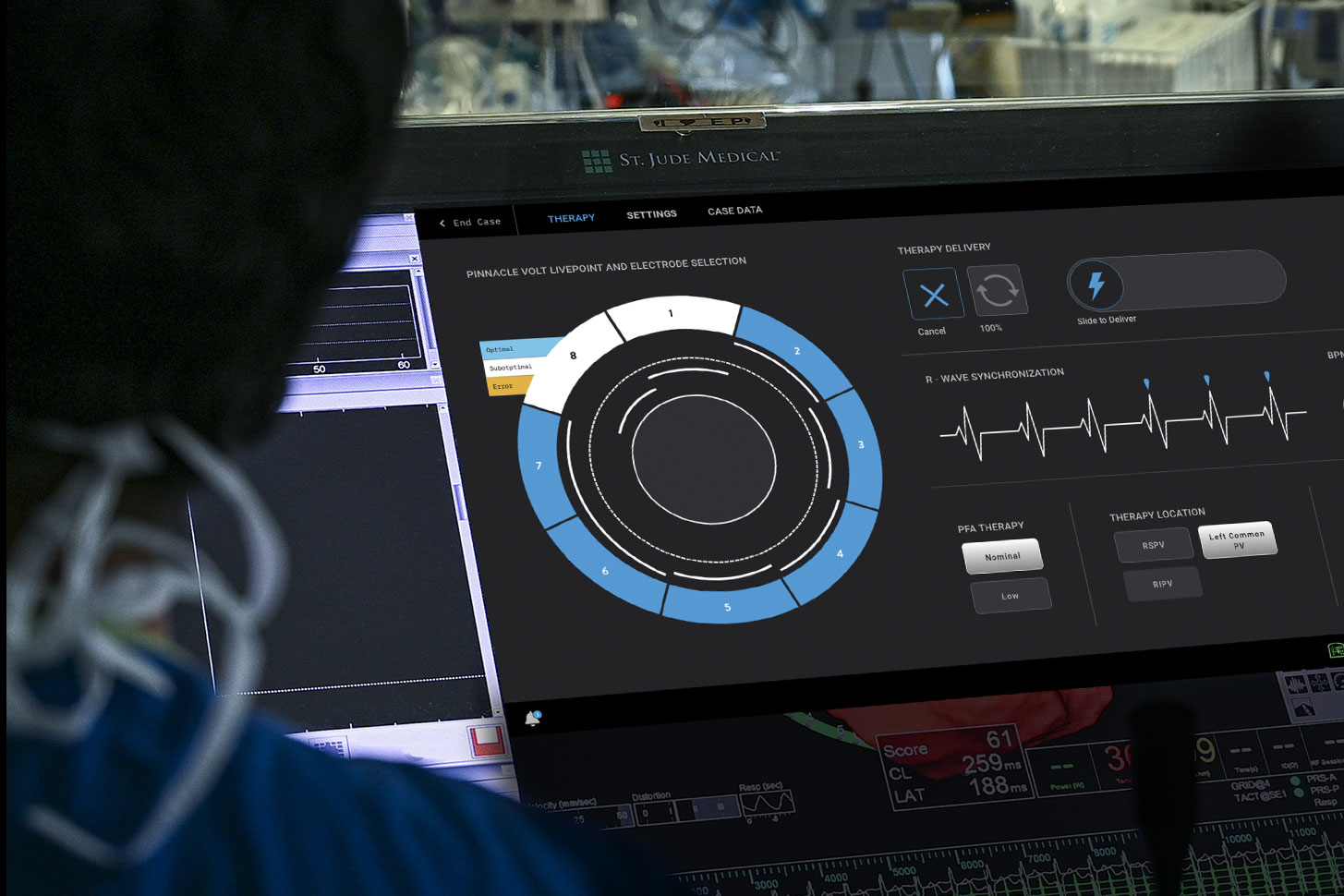
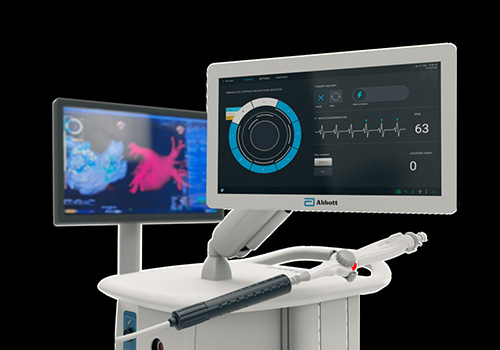
The design for the Pulsed Field Ablation System was inadequate for global commercialization. I led a comprehensive redesign effort, focusing on key elements such as intuitive navigation, clear visual feedback, and streamlined workflows. These design choices aimed to enhance procedural accuracy, reduce potential use errors, and speed up task completion times.
Final design
Impact and Results
Improved Procedural Accuracy: The redesigned user interface resulted in a 25% increase in procedural accuracy due to enhanced visualization and control.
Reduced Use Errors: Implementation of safety features and intuitive design reduced use errors by 40%, contributing to improved patient safety outcomes.
Efficiency Gains: Streamlined workflows decreased average task completion times by 20%, allowing healthcare professionals to focus more on the procedure.

So I asked:
How might we redesign the Abbott’s PFA System user interface to reduce complexity, improve usability, and make it suitable for clinical trials and global commercialization while ensuring procedural accuracy, minimizing use errors, and accelerating task completion times?
Goals and Challenges
Design objectives

Constraints

Process
I embraced user-centered design principles throughout the iterative redesign process. By establishing continuous feedback loops, I systematically refined the surgical device interface through multiple testing cycles, ensuring it effectively served all users while meeting all clinical and commercial requirements.

I explored two navigation concepts this is the dashboard concept
Navigation
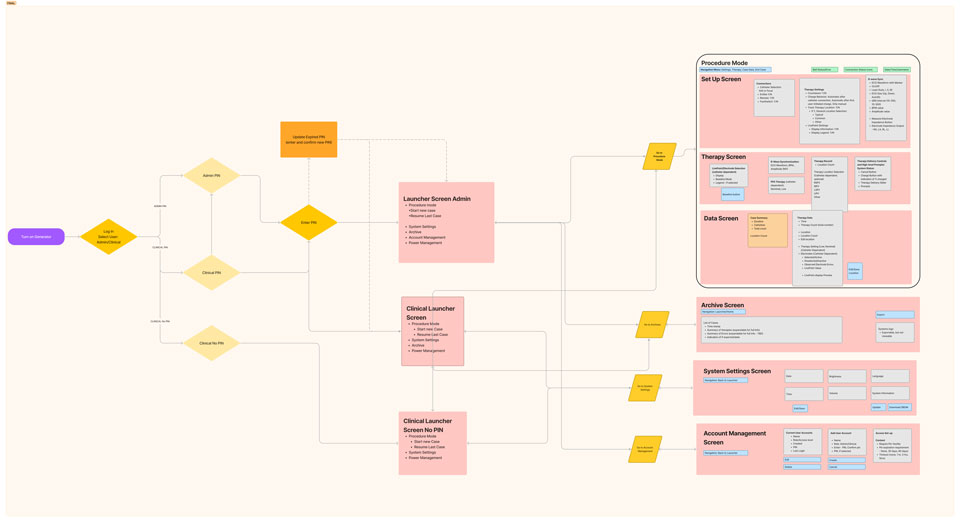
Comprehensive mapping of the surgical device interface showing decision paths, screen relationships, and detailed UI components for the optimized system.
Usability Testing

Iterative design validation through formative and summative testing with 8-10 participants per cycle, creating feedback loops to refine the interface.
Prototyping
I created low fidelity prototypes of the system’s interface to conduct usability testing. This iterative feedback loop helped validate design decisions, identify improvements, and prioritize features before finalizing the interface or moving to development..


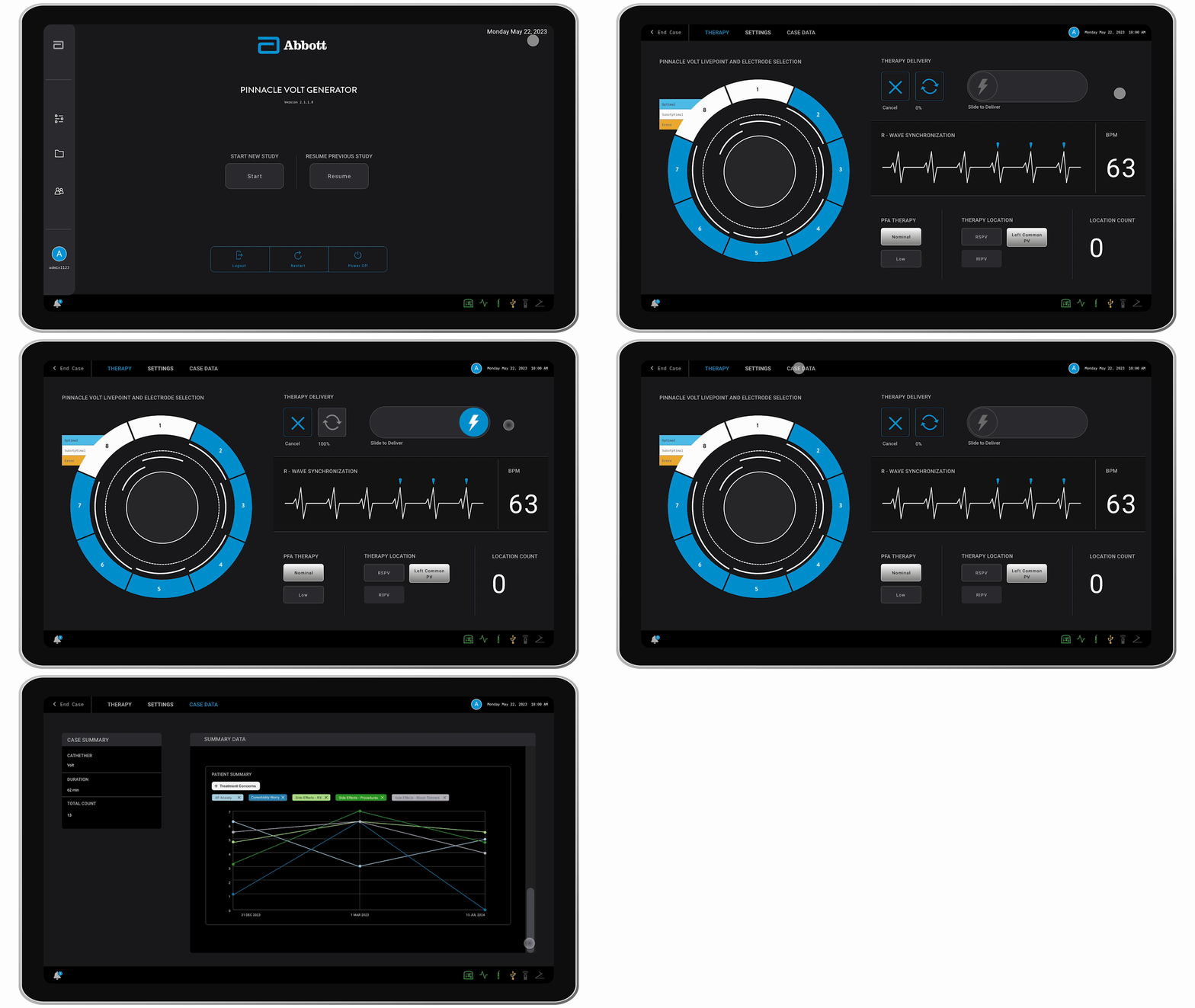
Four iterations of the therapy delivery system UI, featuring electrode selection dials, R-wave synchronization, therapy controls, and location tracking
Next Steps
If you’re interested in learning more about the detailed design process and how these outcomes were achieved, I’d be happy to share a comprehensive presentation during an interview.